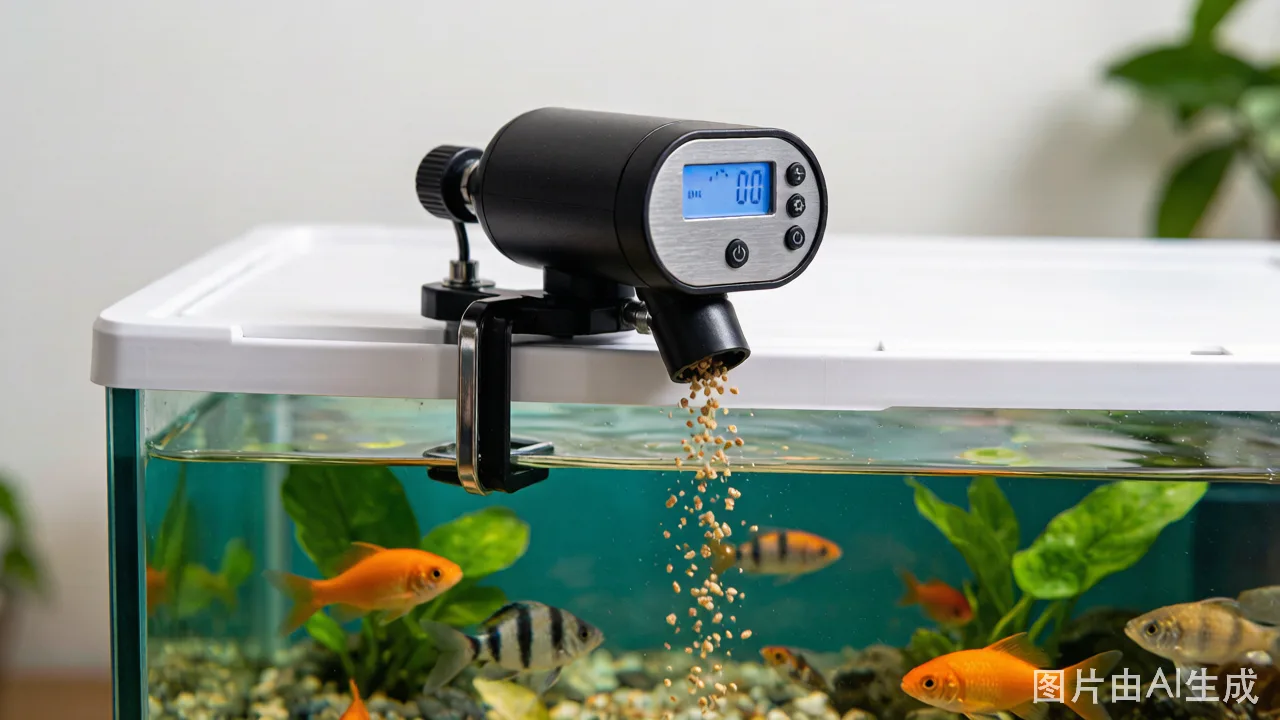
An automatic fish feeder dispenses flakes or pellets on a schedule, so your fish eat while you travel and your tank isn't overfed by a well-meaning neighbour. Used well, it is a small luxury that prevents big mistakes.
What it does
A timer-driven drum drops a set amount of dry food at programmed times. Most run on batteries and clamp to the lid, rotating to release food into the water.
How to choose
Pick one with adjustable portion sizes and multiple daily feeds. A moisture-resistant seal matters so food doesn't clump. Test it for a few days before relying on it.
Pro tip
Always test-run the feeder for several days with the same food you'll use — clumpy flakes can jam it, leaving fish unfed on day three of your trip.
Our shortlist
- Eheim Everyday — Reliable drum feeder for flakes and small pellets.
- NICREW digital feeder — Good portion control and multiple feeds.
- Zoo Med betta feeder — Compact for small tanks and bettas.
Setup and placement
Load dry food, mount above the water, set times and portions, and run a trial. For long trips, have someone check once midway if possible.
Common questions
Best for short trips (a few days to two weeks) and consistent daily schedules. Not a substitute for a varied diet — use it for staple dry food, not live or frozen foods.
See also our full gear hub and the FreshwaterNest tools.
How to choose the right one
With automatic fish feeder guide: feeding while you're away, match the tool to your tank volume and stocking, not to the marketing. A filter or heater sized for a 20-gallon tank will struggle in a 55, and oversized gear can stress sensitive species. Read the spec sheet in terms of your actual water volume.
Setup and maintenance
Position the unit for good flow and easy access, then maintain it on a schedule: rinse media in old tank water (never tap water), and check performance during each water change. Well-maintained gear lasts years and keeps water stable between services.
Alternatives at a glance
No single product suits every tank. Compare build quality, running cost, and how much hands-on time you want. For many beginners a simpler, reliable option beats a feature-heavy one they never fully learn to use.
Buying tips
Buy from a retailer with a real return policy, keep the receipt, and resist the urge to overspend on the first model you see. A mid-range unit from a known brand usually beats a cheap unknown on reliability.
How to choose the right one
With automatic fish feeder guide: feeding while you're away, match the tool to your tank volume and stocking, not to the marketing. A filter or heater sized for a 20-gallon tank will struggle in a 55, and oversized gear can stress sensitive species. Read the spec sheet in terms of your actual water volume, and add a margin for a planted or heavily stocked tank. Reviews from long-term users beat glossy product photos when it comes to reliability.
Setup and maintenance
Position the unit for good flow and easy access, then maintain it on a schedule: rinse media in old tank water (never tap water, which kills beneficial bacteria), and check performance during each water change. Well-maintained gear lasts years and keeps water stable between services. Keep a spare of critical items — a backup heater or air pump — so a single failure never becomes an emergency that costs fish their lives.
Alternatives at a glance
No single product suits every tank. Compare build quality, running cost, and how much hands-on time you want. For many beginners a simpler, reliable option beats a feature-heavy one they never fully learn to use. Consider energy use too: a device running 24/7 adds up, and a efficient model pays for the price difference over a year of operation.
Buying tips
Buy from a retailer with a real return policy, keep the receipt, and resist the urge to overspend on the first model you see. A mid-range unit from a known brand usually beats a cheap unknown on reliability and spare-part availability. Watch for bundles that include media or fittings you would buy anyway — they are often the better value once you price the extras separately.