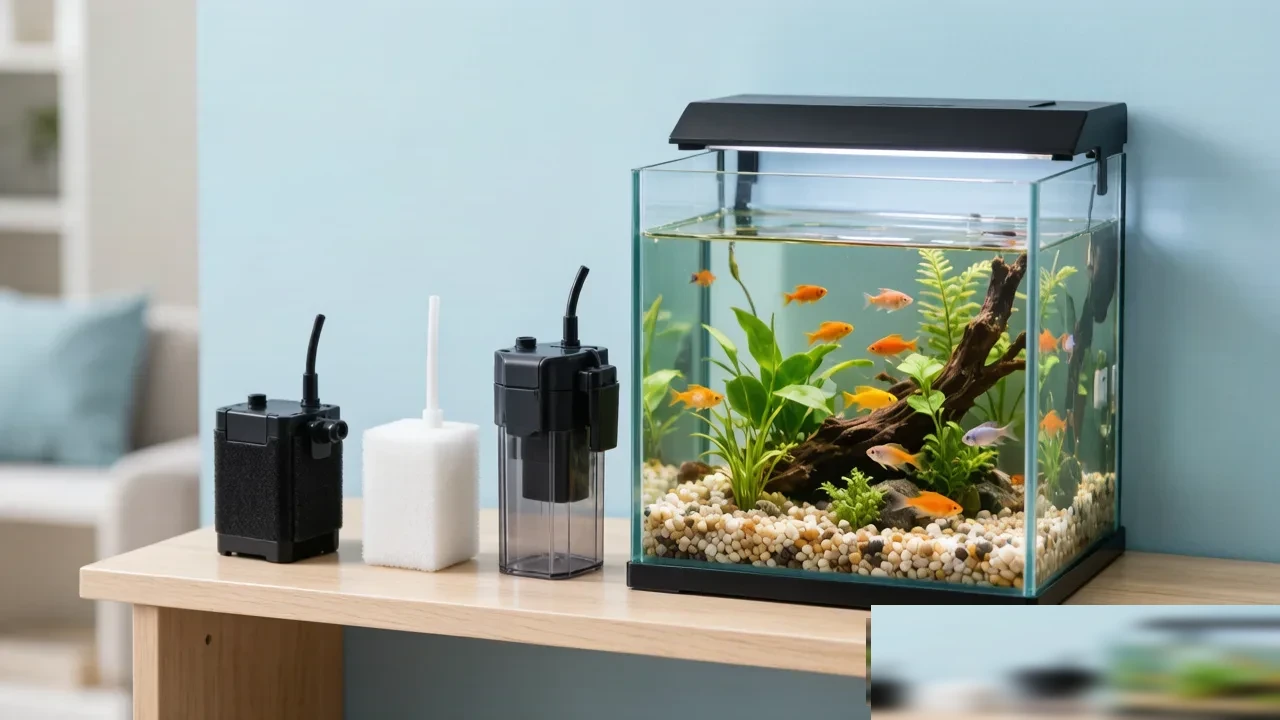
Two filter families dominate the freshwater hobby: the canister and the hang-on-back (HOB). They are not really rivals so much as tools for different jobs, and plenty of tanks run one of each. The trick is matching the filter to your tank size, stocking, and tolerance for maintenance.
How each filter works
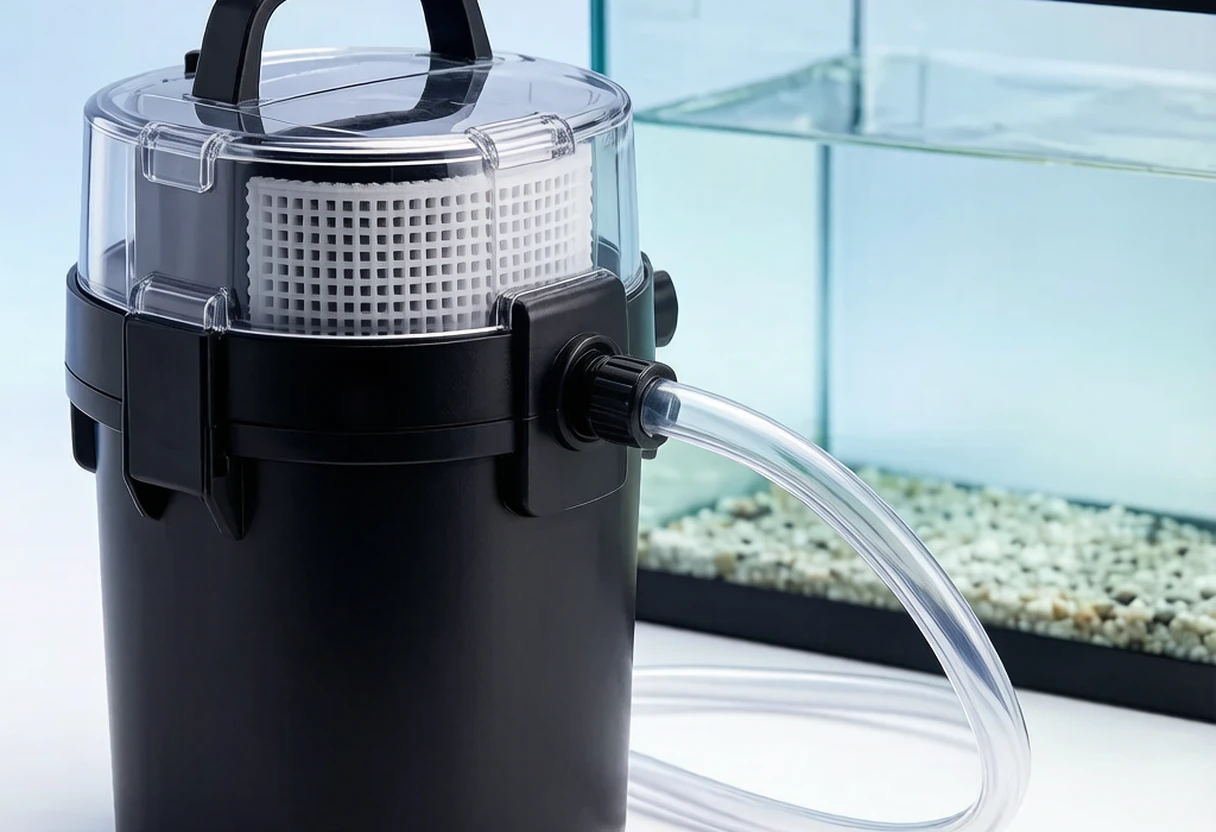
A canister filter sits in the cabinet below the tank. Water is pumped down into a sealed canister packed with layered media — coarse mechanical, then biological and chemical — and returned through a spray bar. A hang-on-back filter clips to the rim: an impeller pulls water up through a cartridge and spills it back, agitating the surface. Both rely on beneficial bacteria to process ammonia and nitrite, as explained in the nitrogen cycle.
| Canister | Hang-on-back | |
|---|---|---|
| Best tank size | 30+ gallons, especially tall/planted | 10-55 gallon community |
| Media capacity | Very high; customisable layers | Limited; mostly cartridge |
| Flow & surface agitation | Adjustable, gentle spray bar | Strong, good gas exchange |
| Look in the tank | Hidden in cabinet | Visible on the rim |
| Maintenance | Less often, but messier | Frequent, quick rinses |
| Noise | Quiet once primed | Hum from impeller/return |
| Cost | Higher upfront | Lower upfront |
| Risk to livestock | Intake strainer can trap small fish | Intake can trap small fish/fry |
When to choose a canister
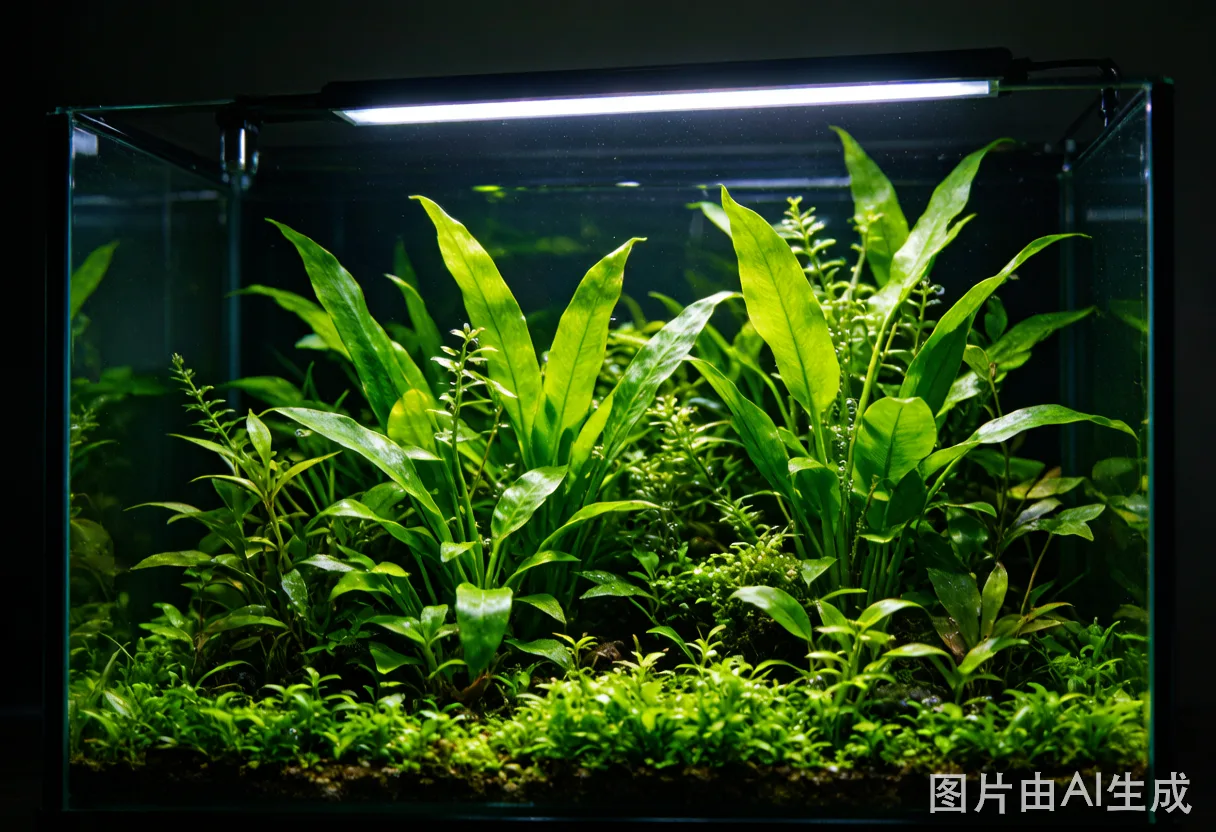
Pick a canister for tanks of 30 gallons and up, especially planted or heavily stocked setups where you want huge media space, a custom blend of bio-media, and a clean cabinet look. See our pick in best canister filter for a 20-gallon tank. Canisters also shine in planted tanks where you want to run extra media without clutter.
When to choose a hang-on-back
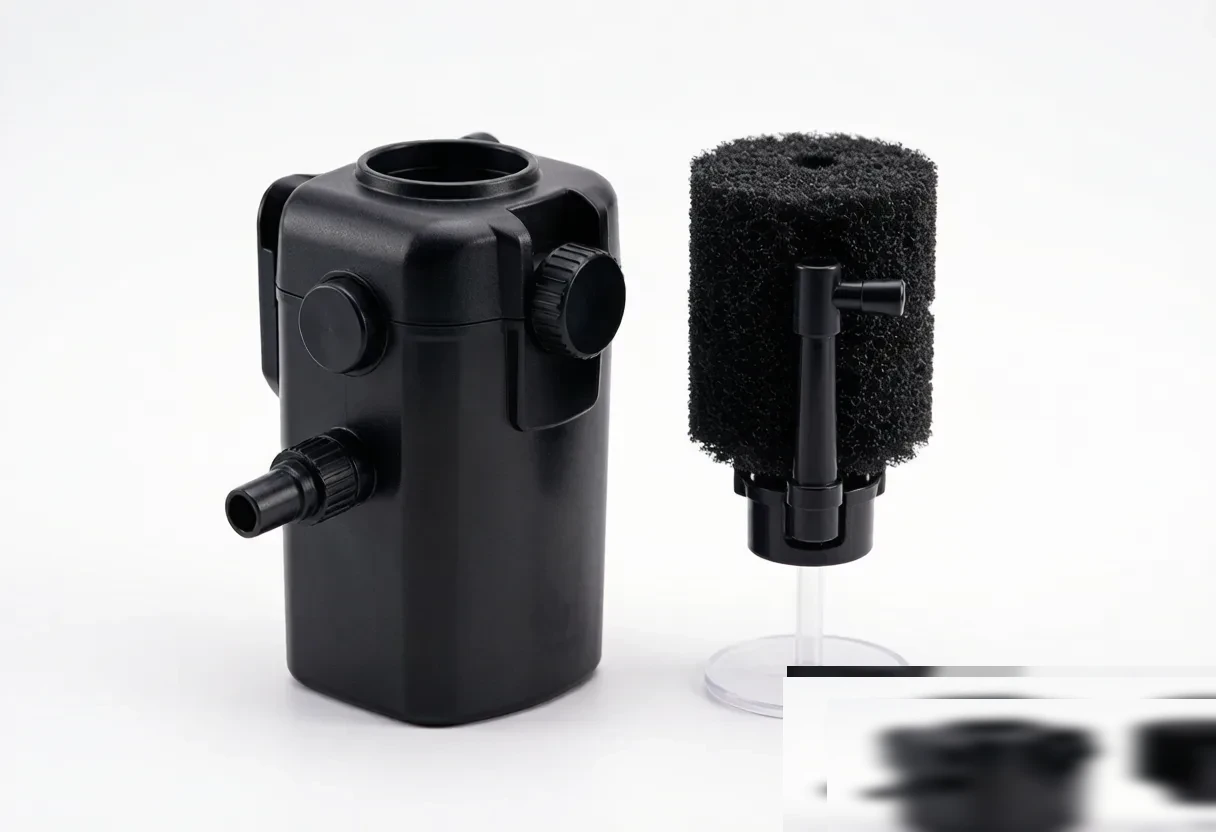
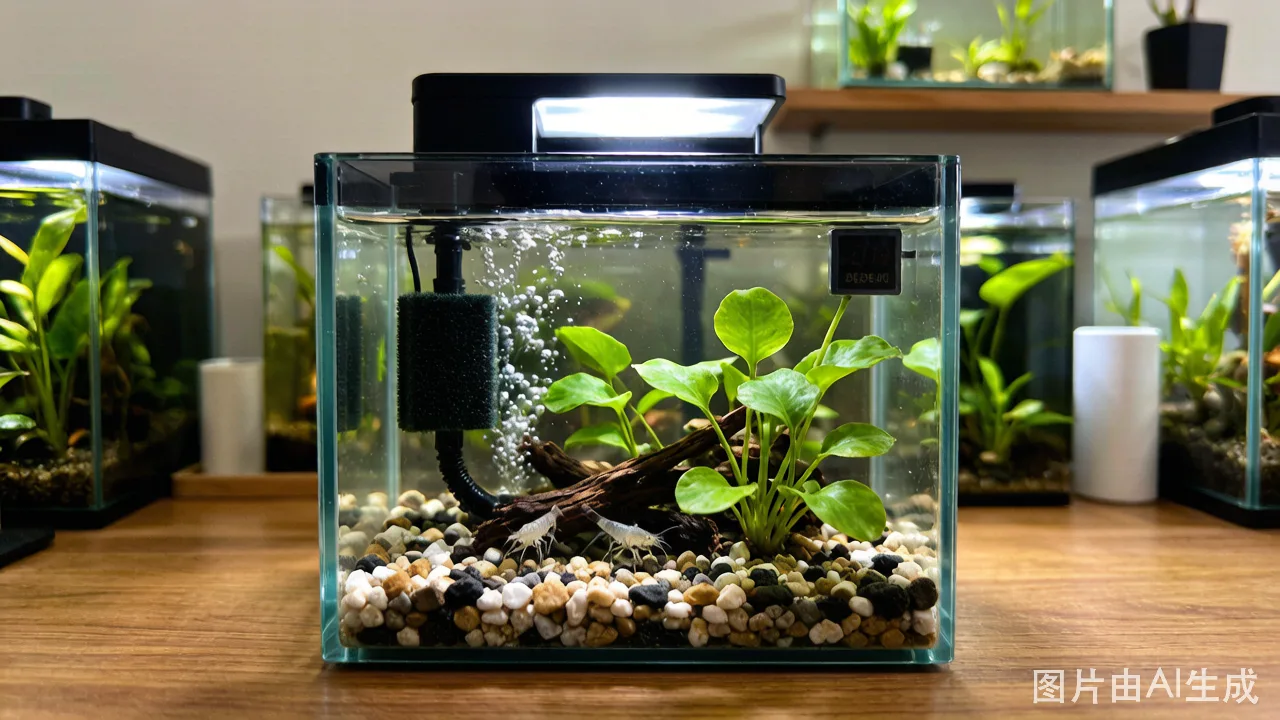
A HOB is the right call for most 10-55 gallon community tanks: it is cheap, simple, and the falling return keeps oxygen high. It pairs naturally with a sponge filter for fry or shrimp. If you want the fuller picture, read choosing the right filter and HOB vs sponge.
Can you run both?
Yes, and it is a great combo. A canister handles the heavy biological load while a HOB adds surface agitation and a second stage of mechanical filtration. Running both also gives you redundancy if one fails. Most beginner setups start with a HOB and add a canister as the tank grows.